OPERATIONAL PX
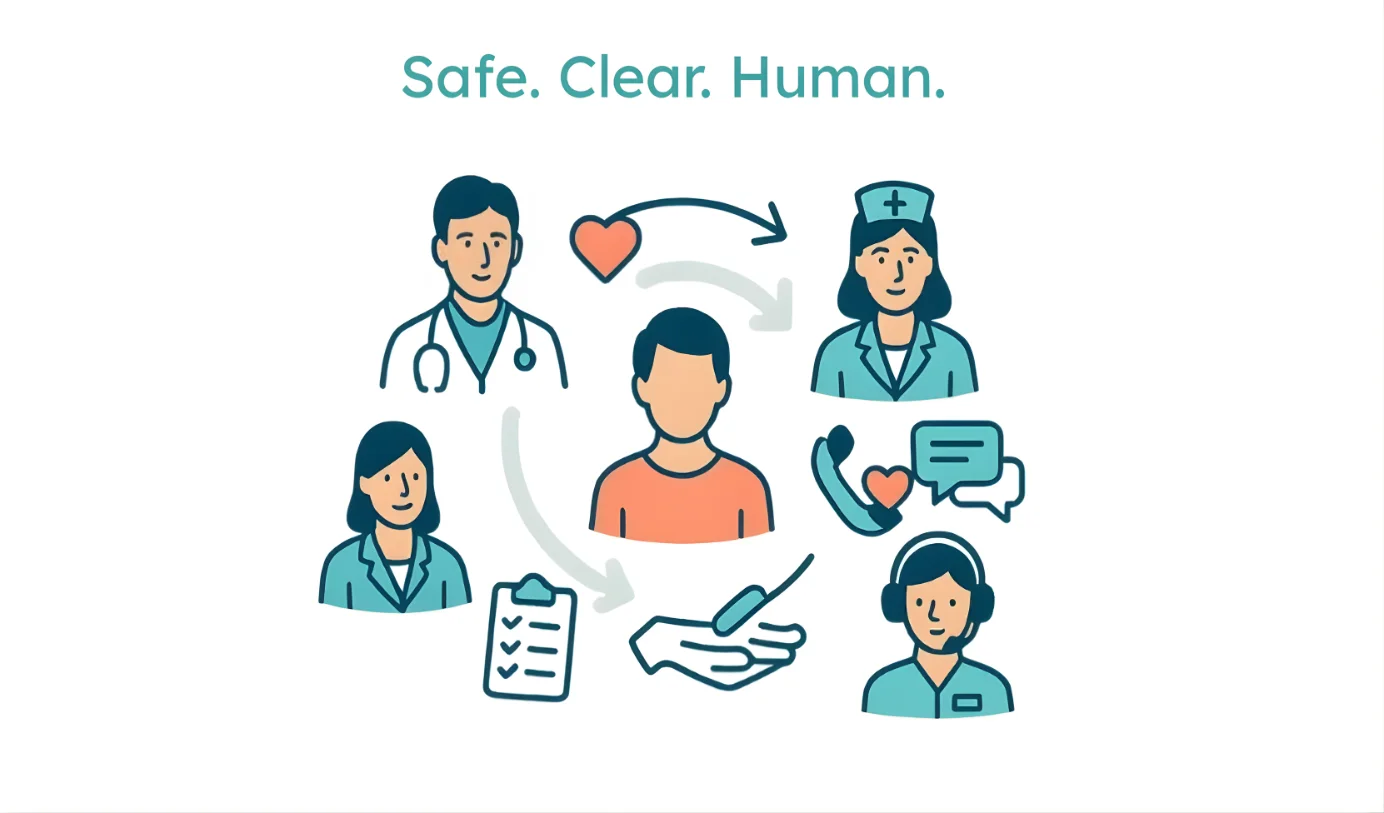
Build consistent care at every touchpoint. We equip frontline teams with practical skills in communication, empathy, de-escalation, and follow-through so patients feel informed, safe, and cared for. This track serves doctors, nurses, navigators, reception, and call center.
Dedicated training for
Doctors
Nurses
Navigators
Reception
Call Center
50%
Fewer Complaints
Expectations set upfront, issues resolved fast, feedback closed with ownership.

Doctors, Nurses & Navigators
Clear talk, calm delivery, and complete handovers. We train clinical teams to read patient cues, set expectations, manage difficult conversations, and close the loop across specialties. Checklists and phrasing reduce friction at the bedside and during transitions, so care stays coordinated and patients feel informed from consult to follow-up.

Reception & Call Center
First contact sets the tone. We build confident scripts for information, triage, booking, and de-escalation. Teams practice active listening, call control, and written replies that are clear and empathetic. Standard responses, routing rules, and quality reviews lift first-contact resolution, shorten waiting, and keep promises visible and traceable.
Training tracks by role
Each role shapes a different moment in the patient journey. We train the exact behaviors, scripts, and handoffs for that role while keeping one language across the clinic.
Doctors, nurses, navigators, reception, and call center practice with real cases and adopt shared standards. Everyone knows what good looks like and how it will be measured..
The result is consistent communication, cleaner transitions, and confidence at every desk, ward, and phone line.
Doctors
🔹Effective communication techniques in the relationship with the patient and their family members.
🔹Patient case management: improving interdisciplinary and interdepartmental collaboration.
🔹Effective communication techniques with patients in "Doctor Google" and AI era.
🔹Patient Experience and use of feedback.
Nurses
🔹Empathic communication in the relationship with the patient.
🔹Managing the difficult patient.
🔹The nurse as a key pillar in the extended patient experience.
🔹Group workshops, fostering collaboration among participants.
Navigators
🔹The navigator's role in the patient experience.
🔹Empathetic communication with patients .
🔹Managing difficult patients.
Reception
🔹How to receive feedback and respond to the patient.
🔹Time management.
🔹Stress management.
🔹Communication with patients.
🔹Communication across multiple channels (WhatsApp, email, social media).
🔹The relationship between doctors and the reception team.
Call Center
🔹Empathic communication over the phone.
🔹Written communication for requests, complaints, and social media.
🔹Basic medical literacy / lab tests / medical specialties.