

Net Promoter Score, or NPS, has become a standard in healthcare in recent years. Many clinics monitor it closely, proudly display it on social media, or announce it at events. Yet paradoxically, many managers complain: “We have a high NPS, but patients don’t come back.” This gap between a high NPS and the volume of new patients can be confusing and risks turning the philosophy of NPS into just a nice-sounding statement. If patients are so satisfied, why don’t we see a sharp growth in business? The answer lies in how we interpret the scores and in the difference between perception and behavior.
NPS = Loyalty?
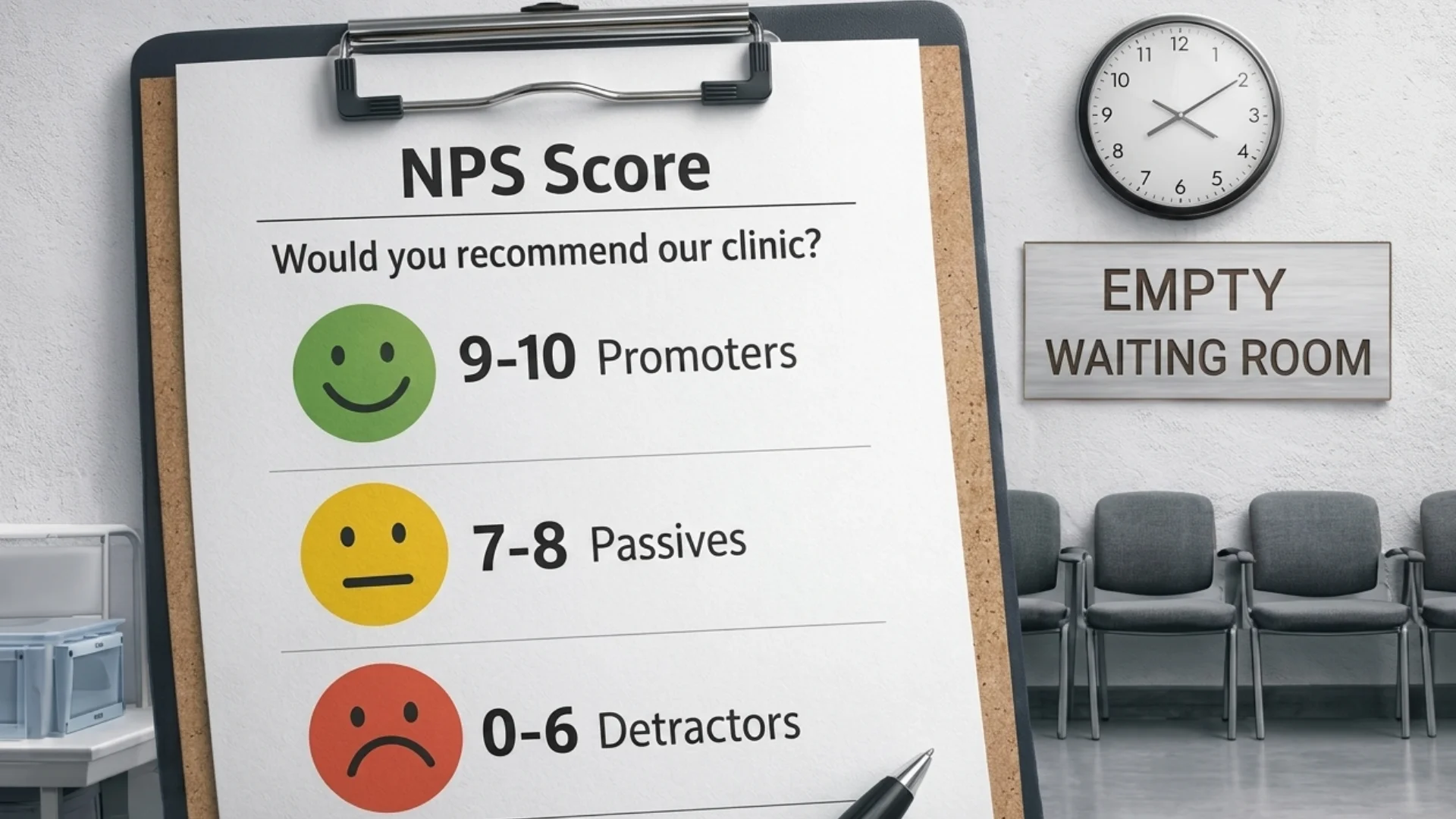
On the surface, NPS seems simple. Patients rate on a scale from 1 to 10 how likely they are to recommend the clinic to others. In theory, those giving 9s and 10s should become the clinic’s promoters and bring in more patients. In practice, however, a high NPS doesn’t automatically translate into a large number of new patients. In healthcare, an NPS above 50 is considered excellent, yet many organizations with such scores still face real retention and growth challenges, according to SurveyMonkey. What does this show us? That NPS doesn’t tell the whole story.
Here’s why. The problem isn’t the score itself, but how we look at the experience. NPS measures a perception at a specific moment, usually right after the consultation. The patient has just interacted with the doctor, the reception staff, and the nurse, the issue has been addressed, or at least acknowledged, and there’s a sense of relief. The present emotion is real, it’s warm, but it doesn’t guarantee future behavior.
In other words, a high score does not automatically equate to patient return.
How Do We Build Behavior?
For satisfaction to turn into actual return visits or recommendations, we need to look beyond the consultation itself. Without clear follow-up, without guidance on next steps, and without building a post-visit relationship, intention remains just intention. Satisfaction is an immediate reaction, while loyalty is a consolidated behavior. And between the two lies a space often overlooked: continuity. In healthcare, as in other industries, a correct or good medical experience is not enough to generate loyalty or advocacy.
What Is the Real NPS?
This is where the difference between merely measuring perception and truly understanding patient experience becomes clear. Indicators that reflect real behaviors show whether a patient perceives the experience as valuable enough to return or recommend the clinic. Return rates, time until return, patient lifetime value, and how the clinic maintains contact after the visit are the metrics that turn momentary feedback into concrete business results.
What Does Mature PX Look Like?
A mature Patient Experience model in any clinic should not stop at measuring NPS. Because the difference between perception and behavior is, in fact, the difference between satisfaction and growth. Experience begins before the visit, continues during the interaction, and is reinforced afterward. Each stage influences the patient’s decision to return or recommend.
A high NPS remains important, but without processes and indicators showing the real business impact of a high score, NPS can become just a comforting illusion.

Article written by Ana Maria Andreescu
